Hi there,
docpark just shared an Instagram photo with you:

“Morning workout #golf ”
(taken at Highland Park Golf Course)
Thanks,
The Instagram Team
Hi there,
docpark just shared an Instagram photo with you:
“Morning workout #golf ”
(taken at Highland Park Golf Course)
Thanks,
The Instagram Team

I’m reminded of Pottersville, USA, from It’s A Wonderful Life, where unless you have money, you will be consigned to manual labor before dying young of an industrial age diseases long ago cured or treated. Strip clubs for the girls, or concubinage if they want to work their way up. No birth control meaning you will have 5 to 10 mouths to feed. Endless wars to fight and to control the excess population. Gated communities will become fortresses. Obey or you’ll be tossed out to face the libertarian, post-apocalyptic paradise of no government, laws, or deodorant.
Read the Article at HuffingtonPost

Pictured above are the Blackberry Bold 9930 and the iPhone 4. They demonstrate two divergent approaches to design. The Blackberry has a full QWERTY keyboard and a few more buttons. The iPhone has famously the single button up front, a power, and volume rocker switch. There are people who swear by the keyboard and for them the Blackberry will always be king. Truth be told, there is an appeal to having a physical keyboard for typing out longer pieces, but all of this is trumped by the convenience of a single large screen. There is a principle laid out in The Innovator’s Dilemma (link) regarding disruptive technologies that is at play here.
The Blackberry represents the sustaining technology of an established company, RIM which has been putting out keyboarded email communicators since the days of beepers and the Clinton administration. It offers a load of features and the apparent love of corporate IT with its locked down security features. The iPhone and other copycat Android phones are the disruptive technology that paradoxically offers less features, an apparently less accurate virtual keyboard, and the ire of corporate IT and geeks in general for missing lots of buttons, but offers utility in its screen, simple interface, and applications which can turn the iPhone into an infinite variety of gadgets. With evolution of the virtual keyboard, and increasingly higher resolution screens, and soon to be introduced bigger screen, and an app store with over half a million apps, the iPhone is eating the Blackberry’s lunch.
This is played out again and again and the established companies invested in their sustaining technologies get rolled over by startups with disruptive technologies that initially offered less or inferior specifications but offered utility with simplification. In vascular surgery, this happened with endovascular technology which compared to classic open vascular surgery appears to offer inferior results on some measures, but offers the utility, particularly to patients, of less invasiveness, fewer dire complications, faster recoveries, and ability to reintervene with acceptable consequences.
The Blackberry Bold 9930 is likely the last of its proud kind –highly evolved, beautifully manufactured, but frankly crippled by trying to be more than it should be by adding touch features to its core product –keyboarded email and text. I was told that IT will be swapping all of these out for iPhone 5 in October.
Apple isn’t sitting on its hands either. It is disrupting itself with its change of screen size and aspect ratio, with its change from a 30 pin connector to a 9 pin connector, and its introduction of Siri. Siri, while initially viewed with enthusiasm, is being panned for often hilarious inaccuracies which ironically mirror the gaffs of its ancestor the Newton in handwriting recognition, but it is classic disruption. It offers the simplicity of NO KEYBOARD, and the promise of conversing with your technology in meaningful ways.
Which leads me to my last point in that in a shifting landscape, you have to be willing to adapt or face the fate of the wooly mammoth, the floppy disk, and even the Blackberry.
Addendum: August 15th -I’ve been using this for two days straight. The battery lasts nicely all day -a reflection of RIM’s parsimony with regard to push email, I think. Dropbox and Evernote apps work okay, but the small screen, as sharp as a tack, is still too small and landscape oriented to be useful. While I don’t mind reading at 5point font or less, and am impressed that the display is nearly Retina-display level pixel density, the lack of space is problematic. Also, no obvious way to number lock the keyboard, but the keyboard does contextually switch to a num lock state, I think. The limitation of the OS to 192mB of total application memory is painful to even think about in this day and age. I don’t think RIM has the time to get this right after wasting so much time getting it wrong.
Addendum: I do have to remark that the screen on the 9930 is amazingly bright and visible in bright daylight and at all angles. The newest downer of the day is when you update or install an app -you are asked to restart which can take upwards of 2 minutes.
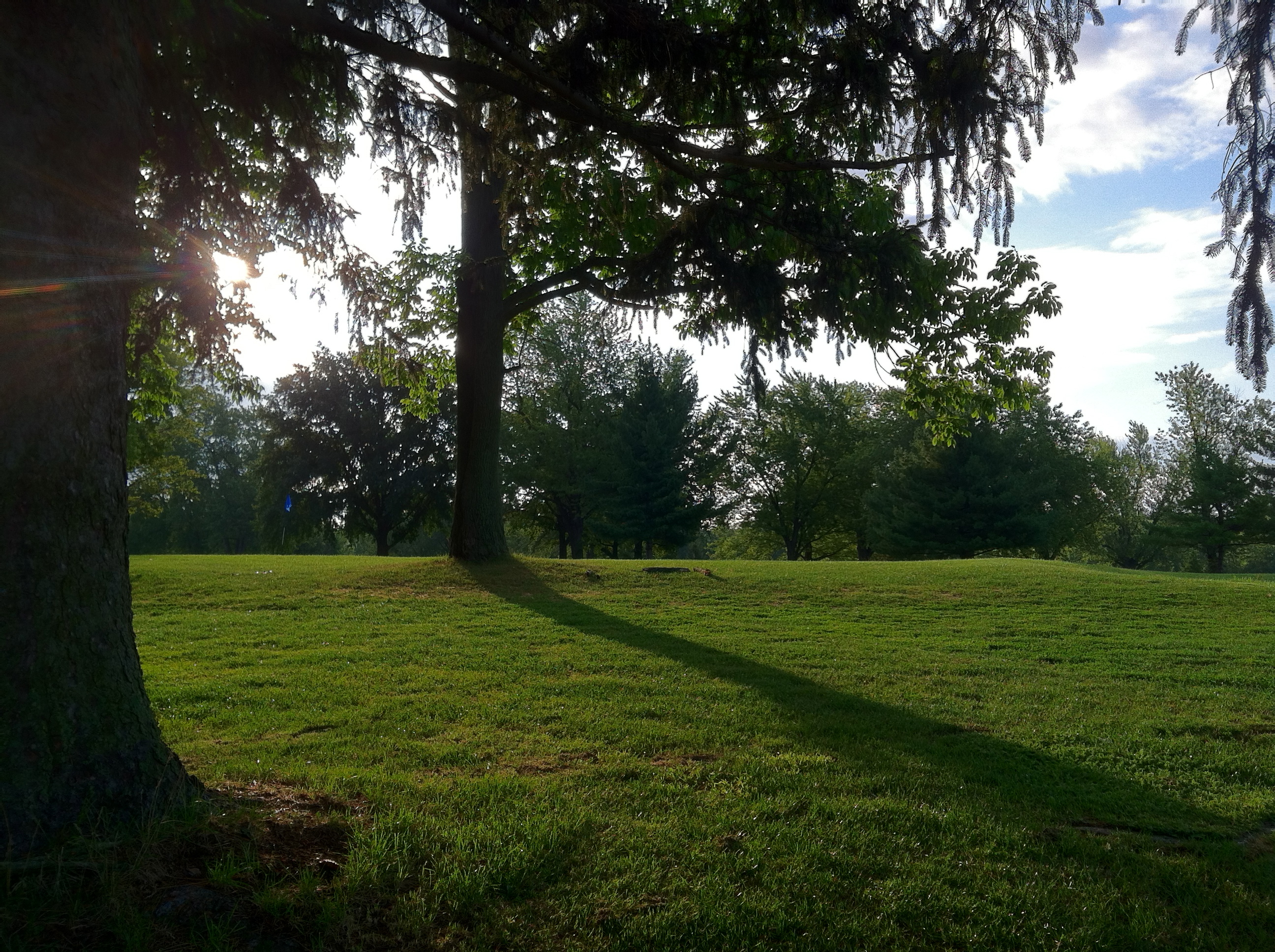
One of the things about the USGA and GHIN is that you have to be part of a club to register your golf scores. I could join the several Northeast Ohio based golf associations, but it would be nice to just join a club. The problem is that a private club is a considerable commitment of time and money.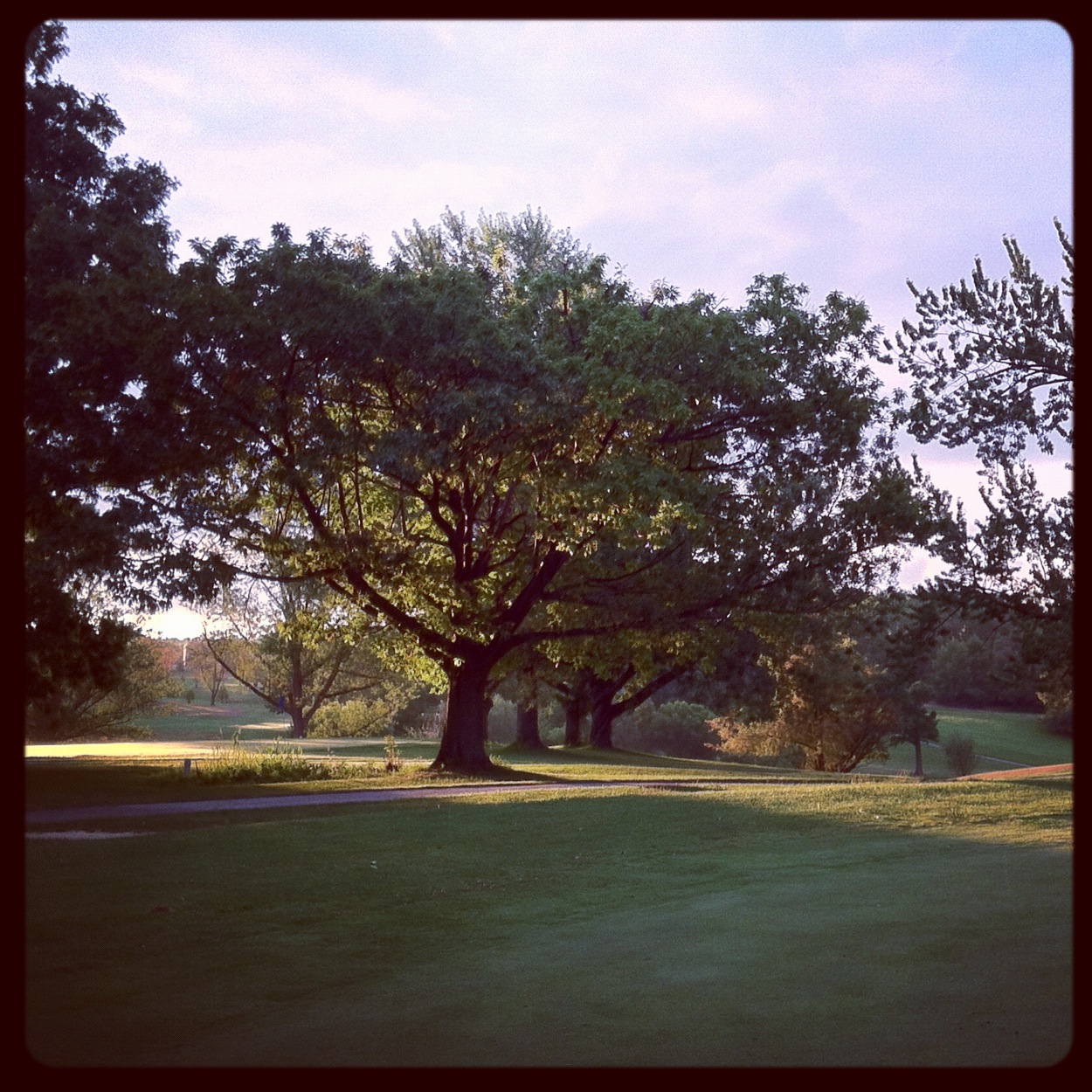 So it was with some joy that I found Highland GC, which is a large 36 hole municipal course. The Red Course is two traditional nine holes that go out and back into the clubhouse, while the Blue Course is an 18 hole track that does not come back for a breather between nines. They are about ten minutes from my driveway, and there is hardly ever a line.
That kind of convenience comes with some compromises. There is no pro shop. There is no driving range. And finally, there is no club for affiliation and registering of scores. It is a municipal golf course and there is a golf egalitarianism that is lost in the rarefied districts of private club golf. In the parking lot, there is an eclectic mix of luxury sedans, beaters, and even a loaded pickup truck. At one time in America, all the different classes mixed in the public sphere, at school, work, and play. This has eroded and you can see it in the economic gerrymandering of neighborhoods and suburbs reflected in their anchor malls and grocery stores. The municipal golf course is the last preserve of the public commons. On the first tee this morning, I saw three groups lined up, Asians, African-Americans, and whites.

Sadly, they were segregated and rather prickly, being all men of a certain age. If you are in the late fifties and are playing golf on a municipal course with swings that could be good for tree chopping, you worked hard all your life, never got handed anything, and have generally skeptical view of the world. On line, the reviews complain of lack of services, poor conditions, and discrimination (both forward and reverse). Yet even with the apparent race relations of a prison yard, and stiff necked, flinty eyed glare of blue collar pride, golf etiquette prevailed and all the groups let me play through with courtesy and even a little banter about the good weather. And that is the lesson for us all. In golf there is hope.
The African American twosome were the first to let me through. Both had the mien of philosopher kings, ancient wise men, spiritual healers. They clearly enjoyed each other’s company and were in no hurray, and shooed me onwards. The Caucasian twosome were clearly betting on everything that could be bet upon during a round of golf, and seemed to be making bets about me as I played through. They were congenial and courteous. The foursome of Koreans were the most fearsome. They didn’t smile at me when I asked to play through, and I held off speaking in Korean because I thought it might trigger some kind of outburst that could only come from 4 Korean dads, but I overheard them their captain say, let him through in Korean. They watched me tee off in silence and I bid them adieu.
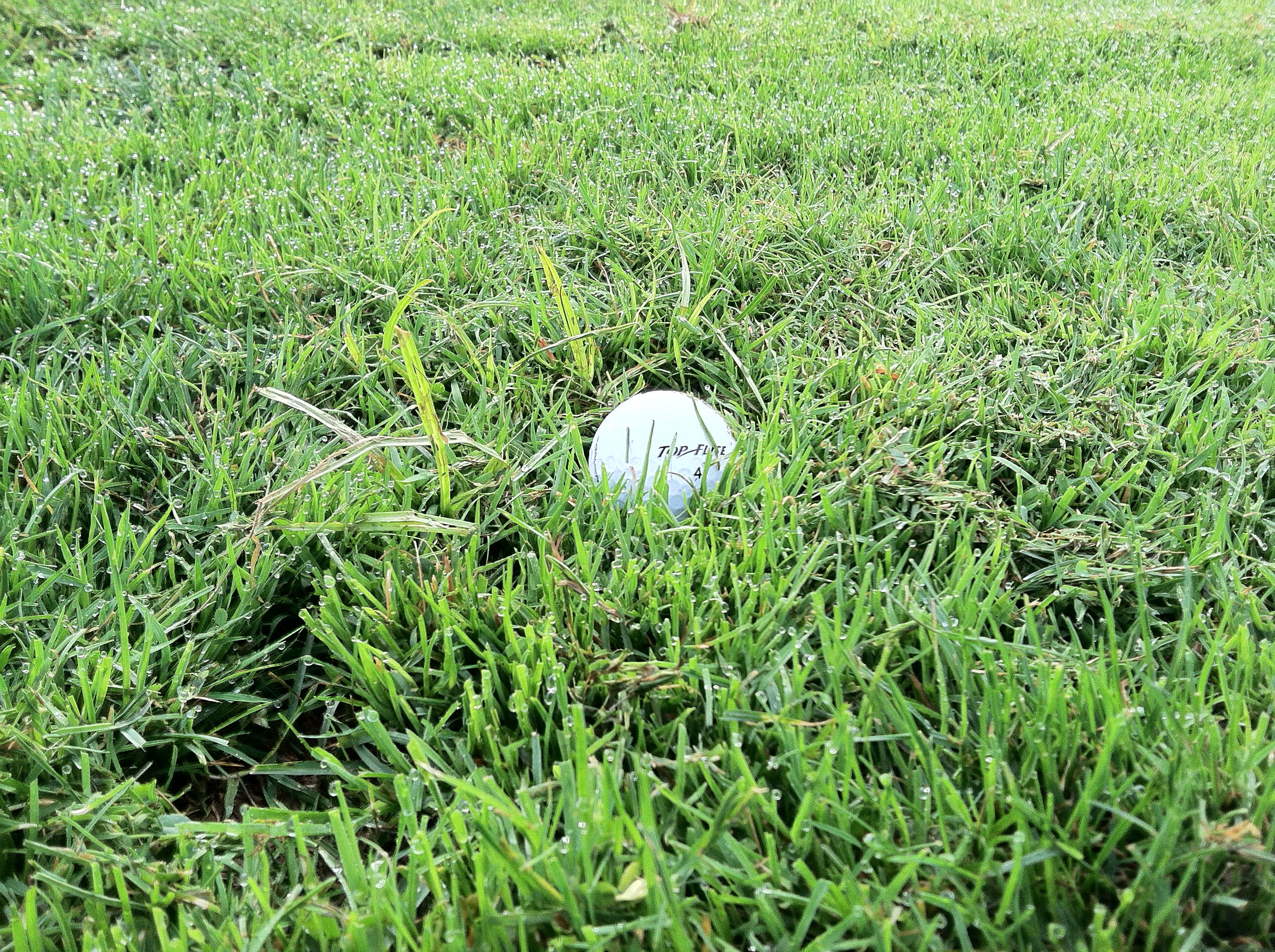
On the fairway!
The course had its problems -I suspect from lean budgets and a very hot and dry summer. There were dead patches on the greens and fairways, and uneven mowing on both. That said, from the tips, the course was a lot more fun than I could usually expect to get for 35 bucks.
Addendum: found out they mow on Monday. Once mowed, the fairways and greens are very nice. This place is growing on me. Plus, the starter asked me if I was a golf pro or golf writer, which really made my day.

I’m a collector of books in vascular disease and golf. When I found out that Mr. Johnny Revolta was one of the great golf teachers of the 20th century and had authored a book, I started a search and found this first printing which had been a gift to someone who was a student of Mr. Revolta’s.
The reason why I jumped at this was the fact that I found synchronicity between my golf guru’s advice and the snippets of writing I found on the Internet. It was all from the premise that golf at its heart is a simple game.
This is in line with my other favorite golf books by Sam Snead and Fred Couples. An example of a book not to get because it will ruin your game is Ben Hogan’s book on his swing which looks more like an Army field manual for using some terribly ancient and complicated weapon.
This book is available as a instant reprint from Amazon, but costs three times as much. This one I got for 12 bucks feels like an overdue library book found under your recently deceased great uncle’s sofa. Which makes it even cooler.

When my son turned 8, we enrolled him in an etiquette course at our country club. He was one of only two boys in that class, which had four times as many girls. Etiquette is as popular among boys, it seems, as ballet or gymnastics. So how is it that we teach our children, especially our boys, manners? In my experience in the Midwestern suburbs, for the presumptive future alpha males, it is through football that parents teach their boys how to behave in society.
The cult of football, which recently took a hit in the Penn State scandal, is very much the secular religion in the US, and its principles of individual sacrifice, self improvement, and group effort are laudable. The American ideals are poured into the public ethos of football. Much of America’s recent history can be viewed in a football context, explained in football metaphor, and historical events remembered like games and seasons. If you are a space alien needing education in American culture, you need only to review the past five Super Bowls’ worth of half-time shows and commercials. Football is America’s vernacular.
In watching an etiquette class, I realized that the forms and routines –how a table is laid out, how you approach the chair, which side the drinks are, which side is the meal served, what the utensils are for, etc., create the physical input to dial in behavior and ultimately etiquette. Dressing and behaving like a gentleman makes you a gentle man. Let me explain. The mind can be changed based on what you do physically. It has been shown that simply smiling increases the dopamine levels and changes your brain patterns to one that matches happiness. Yes. Smiling can make you happy.
The mind can be changed based on what you do physically… Smiling can make you happy.
Martial arts like Tae Kwon Do or Kung Fu focus a lot on forms –series of rote maneuvers that are memorized which to me as a student seemed tedious but retrospect have the effect of shaping the mind. Focusing on the forms of courtesy eventually makes you courteous. So where does football and football parenting leave us?
As far as I can tell, it teaches impressionable young boys how to dominate the weak. It confuses narcissism as self-esteem. By its nature, football cannot teach empathy, courtesy, or thoughtfulness. There is nothing wrong with this if your goals for a society are to create a core group of warrior that will fight wars, conquer nations, and pull down an eight figure salary in free agency. The unintended side effect is that you readily miss the opportunity to prevent the development of psychopathic bullies and date rapists. You only have to watch parents at football practice to understand why this is so. It is why figures like Tim Tebow are such an anomaly not only because he seems to outwardly practice courtesy, respect, and reverence. It is why Penn State was allowed to happen, because football is more important that a few little boys.
If you want to teach your child how to compete while being civilized, you can try etiquette lessons, but more practically, you can do no better than golf. The first section of the USGA Rules of Golf is focused on etiquette, but in fact, you teach your child important lessons by having them accompany you for a round on the cart. You learn to wait your turn staying respectfully silent. You learn to be timely and considerate of others in your group and in the groups ahead and behind you. You learn to be honest and to be your own referee. You learn to impose penalties on yourself for transgressions and be transparent about it. You learn to post your scores (like submitting tax returns when running for president). You learn to behave in a way that would make you proud and not ashamed.
As a nation, we need more mediocre golfers than we do washed out football players. We will be far better off for it.
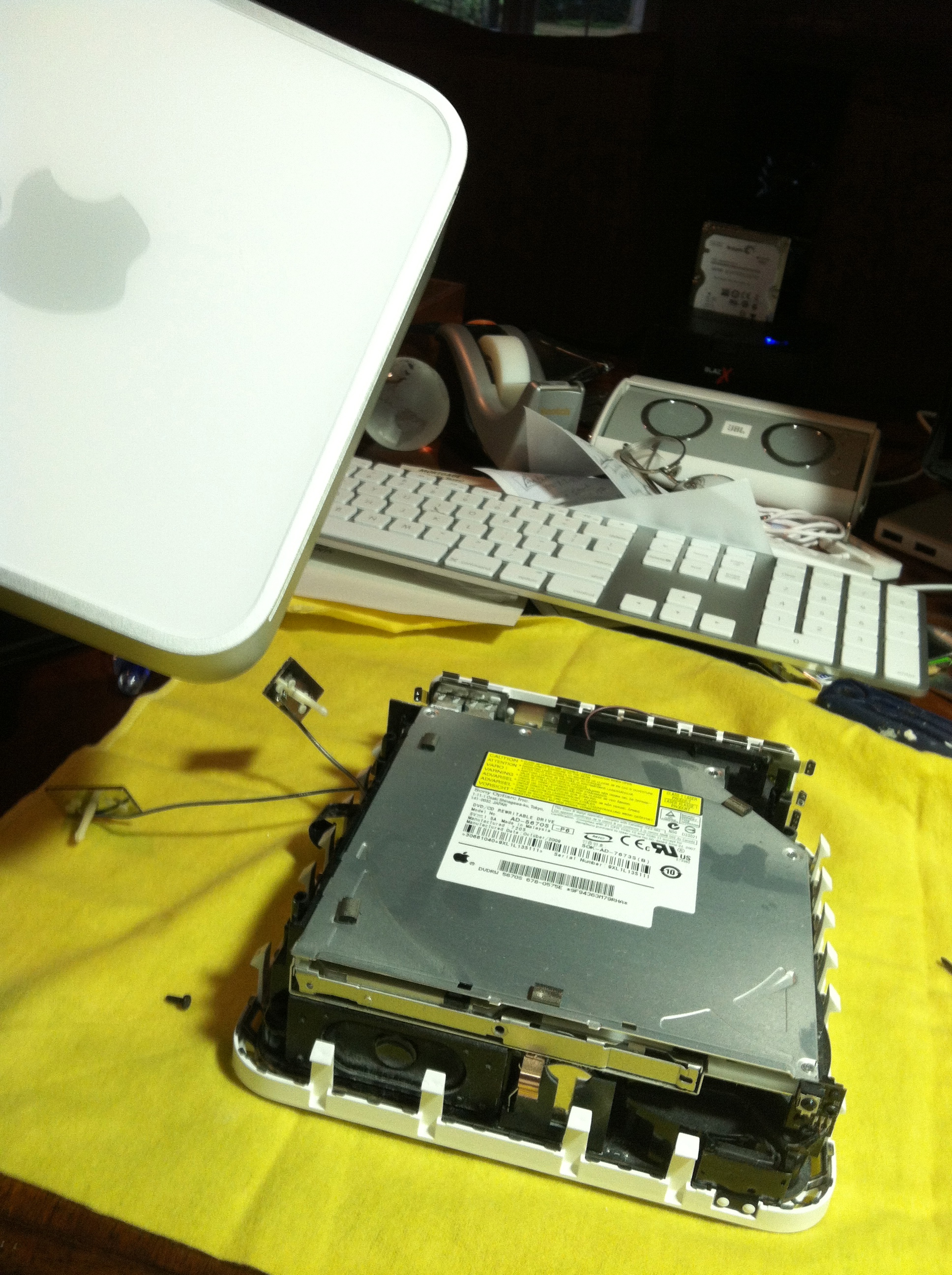
My Mac Mini, purchased in 2009, was beginning to choke on simple tasks and be generally slow as molasses, and I was considering retiring it. It was attached to our TV as our media player, but after trying Apple TV, I decided the latter was far superior, especially after the addition of Hulu+ to the mix of iTunes, Netflix, Youtube, Vimeo, MLB, and Photostream.
I had been using my MacBook Pro as my desktop, but found it to be more useful as an actual laptop, so I moved the Mac Mini to my desk but found it to be, well old. If it were a Windows based system, there would be no question where it would be headed -the recycling bin at Best Buy after I tore out the hard drive. But after I investigated the Mini, it turned out to have two problems -the 160 GB hard drive was nearly full and was a lowly 5400 RPM disk. Also, the stock Mini came with 2GB of RAM. The hard drive would need to be upgraded and I found a nice 750GB SATA drive spinning at 7200 RPM which would speed things up nicely and allow me to create a generous Boot Camp partition (lets me run Windows). The RAM was upgradeable to 8GB. Both upgrades ended up totally $150 from Other World Computing which specializes in upgrade packages for older Macs. To answer the obvious question -I declined using an SSD drive because it would be over $200 for a reasonably sized drive, and I wanted to keep costs down.
The instructions for surgery are on the internet -the OWC site’s videos are comprehensive, but start with the caveat that the upgrade should be done by a professional. If you can replace the batteries on a toddler bath toy, you can kick this. The upgrade was very easy and took all of 10 minutes after cloning the original drive to the new one (using Carbon Copy on trial, does need a SATA reader) which took a few hours. Booting up was noticeably quicker and the computer seemed happier after the brain transplant. I also took the opportunity to blow out a lot of accumulated dust in the machine.
After surgery, the “About This Mac” screen shows the new RAM.

The great thing from doing this was setting up Windows 7 in a Boot Camp partition which gives you a clean install of Windows. The Mac Mini is a GREAT Windows 7 machine, and runs very snappy.
One of the things I regret about the move to increasingly hermetic systems like iPad and MacBook Air and the recently released Retina Macbook is the loss of the ability to upgrade the Mac. This Mini is now good for another 3-5 years as long as Apple supports the upgrade to this system. As a Windows machine, it will probably not get Windows 8, but Windows 7 will be supported for the next 7-10 years if Windows XP is to be used as a rubric.

This bodes well for America’s well being. At one time, doing really cool stuff was America’s metier. Landing a robotic Chevy by a rocket crane on the 4th planet, in a crater that we chose -how cool is that? It must feel like this to pitch one’s first victory after time spent on the disabled list. Of course, if it had failed, it would be another boondoggle example of government waste that could be better spent as pocket change in the ass pockets of troglodytes who don’t care where Mars is and believe the universe was created in a week.
Why are we there? If you are at all curious, that is reason enough that we are there, but for those troglodytes who are upset about government spending, I can reassure you that landing that Chevy with the American Flag logo painted on the side is as good as planting a flag on the planet. I bet you there is even a hidden flag that can be planted if it came to that. Mars is ours.
Read the Article at HuffingtonPost
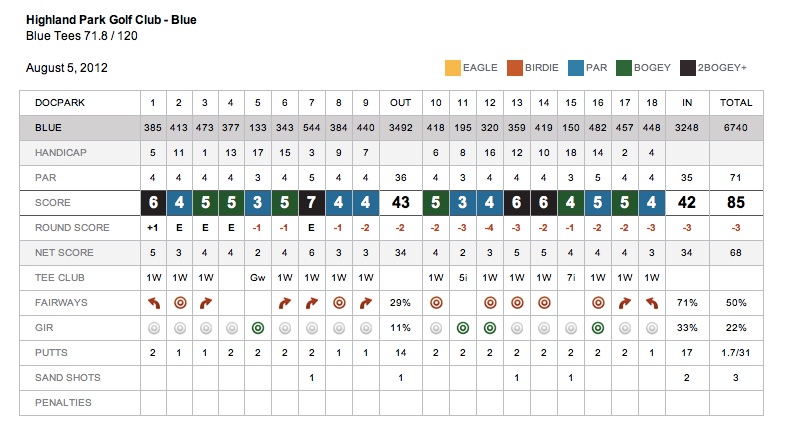 I was looking for a driving range, and found a 36 hole public golf course instead only 5 minutes from my house. Getting there at 7:30, I was surprised to find that the Blue Course was open -basically first come first serve. I paid my 35 bucks for a cart, and played 18 holes in 2 hours, playing through three groups who were very gracious in letting me fly.
I played from the tips and had a blast -the greens were slow and I could take dead aim and blast the ball into the cup.

When I started this blog, I had in mind what could pan out with mindful attention to golf. Would it improve my life? Would it make me a better man? Would my golf get better? One of the first people I turned to in this endeavor was Mr. William Rose, the emeritus golf professional at the Wakonda Club, and a quick sitdown with him was one of the last things I did at Wakonda before I took off for Ohio.
Born and raised in Duluth, Minnesota, Mr. Rose learned to play golf there and after he was demobilized from the Korean War, he joined the professional staff at the Evanston Country Club headed by the recently retired Johnny Revolta. Johnny Revolta, winner of the 1935 PGA Championship along with 25 other titles as a touring pro. Mr. Rose earned his craft from this great teacher and moved to Iowa, taking the position of head golf professional at the Wakonda Club in 1960.
Since that time, Mr. Rose tells me, the club has changed much and not at all. He remembers the club in a very different time when Wakonda was the sun around which everyone’s social and recreational orbits were centered. The pinnacle of that time was when Wakonda Club hosted the US Amateur tournament in 1963, the one where Deane Beman, future PGA Commisioner (the one who Jerry Pate tossed into the water hazard after winning the TPC at the TPC Sawgrass), won. The bridge from #18 tee to the fairway is called the Beman Bridge in honor of that victory.
In the tournament were Billie Joe Patten and Charlie Coe from Augusta National who noticed the work of Mr. Rose’s assistant professional, Mr. Bob Kletcke and recruited him away. Mr. Rose relayed, “They asked me if Bob would be available, I told them he’s packing his bags now.” Mr. Kletcke eventually became the head golf professional at Augusta National Golf Club in 1966. In an interview given to the blog, Carolina Golfer (link), Mr. Kletcke said this:
“I needed to improve my teaching skills so Johnny Revolta, one of the game’s best teachers at the time, got me a job at Wakonda Club in Des Moines, Iowa, where I would study under Bill Rose,” Kletcke offered. ”That turned out to be a wise decision because I learned much from Rose.”
When I was learning piano, I had a thought. What is the lineage of my teacher? If you trace back your teachers to their teachers, could you track the roots back to Beethoven, Mozart, Haydn, or Bach? For example, my basic chemistry teacher in college was Dudley Herschbach who won the Nobel Prize in Chemistry soon after I finished his Intro to Chemistry course. When I teach my son about atomic valence, he should know that he is one step removed from a Nobel Prize winner. Here, with Mr. Rose is a connection to the broader world of golf beyond Wakonda Club, but I always suspected that Mr. Rose had a great mystical connection to golf.
Teachers talk about greatness to inspire their students, but the great teachers inspire greatness from their students, even from the first moments. I remember in 2005 chipping twenty footers with desultory results when Mr. Rose shouted, “point your club at the hole on the follow through.” I made the next chip into the cup and Mr. Rose shrugged and walked away with his students who were as mystified as I was. At my first lesson with Mr. Rose, he told me to use only half of my energy in swinging the club -that golf shouldn’t be so hard. Within five minutes, I was hitting pure iron shots, two of which hit the pin at 150 yards!
I wrote down whatever I could remember from those lessons, but what stuck was the point about golf not being a hard game unless you made it difficult. The same could be said about life, I suppose.
 Golfism -life is a metaphor for golf