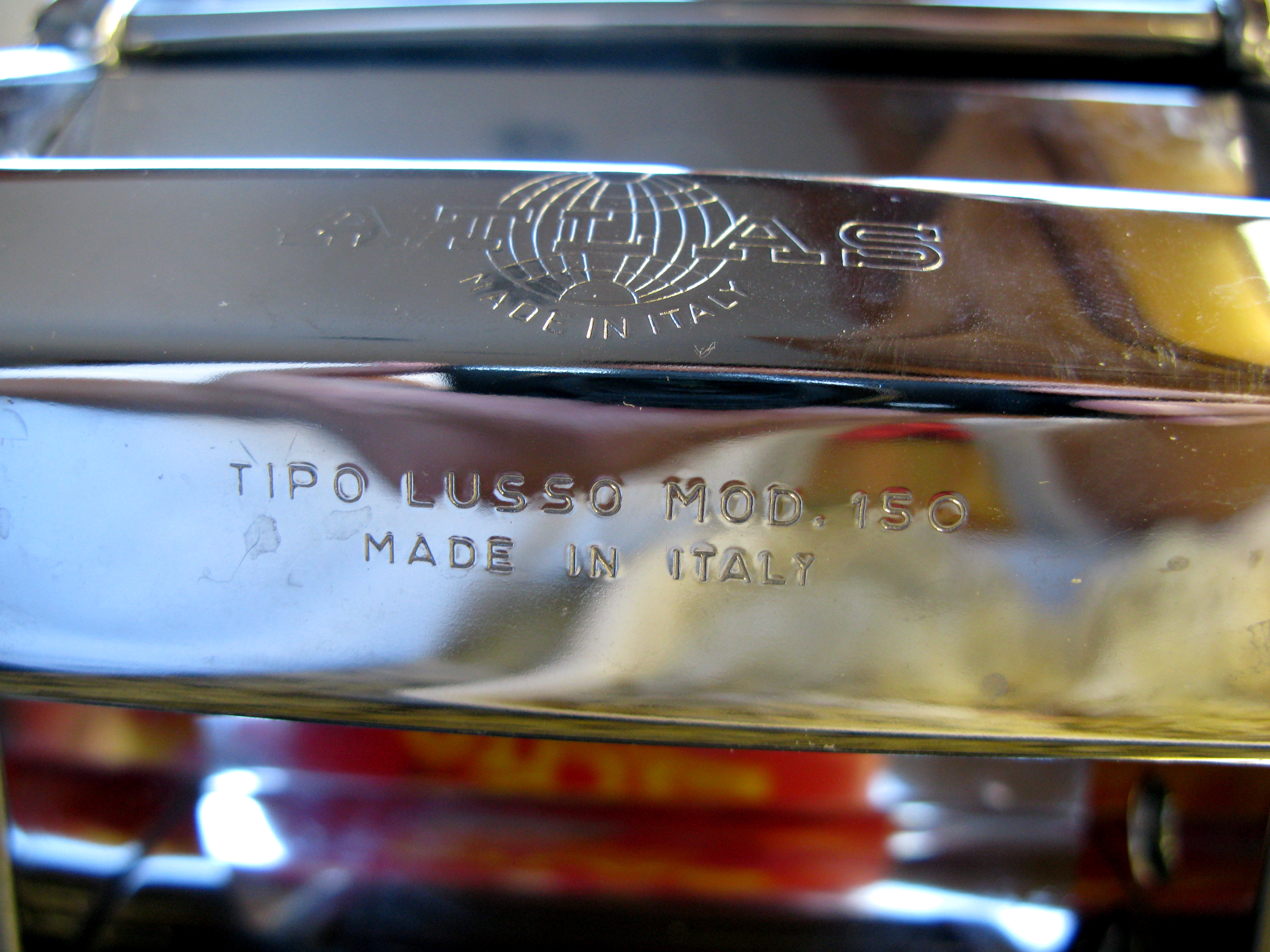
Today, I released Ramen 1.1. The ramen noodles area easy to make with the Atlas pasta press. In 1976, my folks purchased this from Macy’s for $45, which was quite a sum back then. Using an inflation calculator (
link), this comes out to 167.72 today. The quality of this machine is astounding -I could stand on it and it wouldn’t break

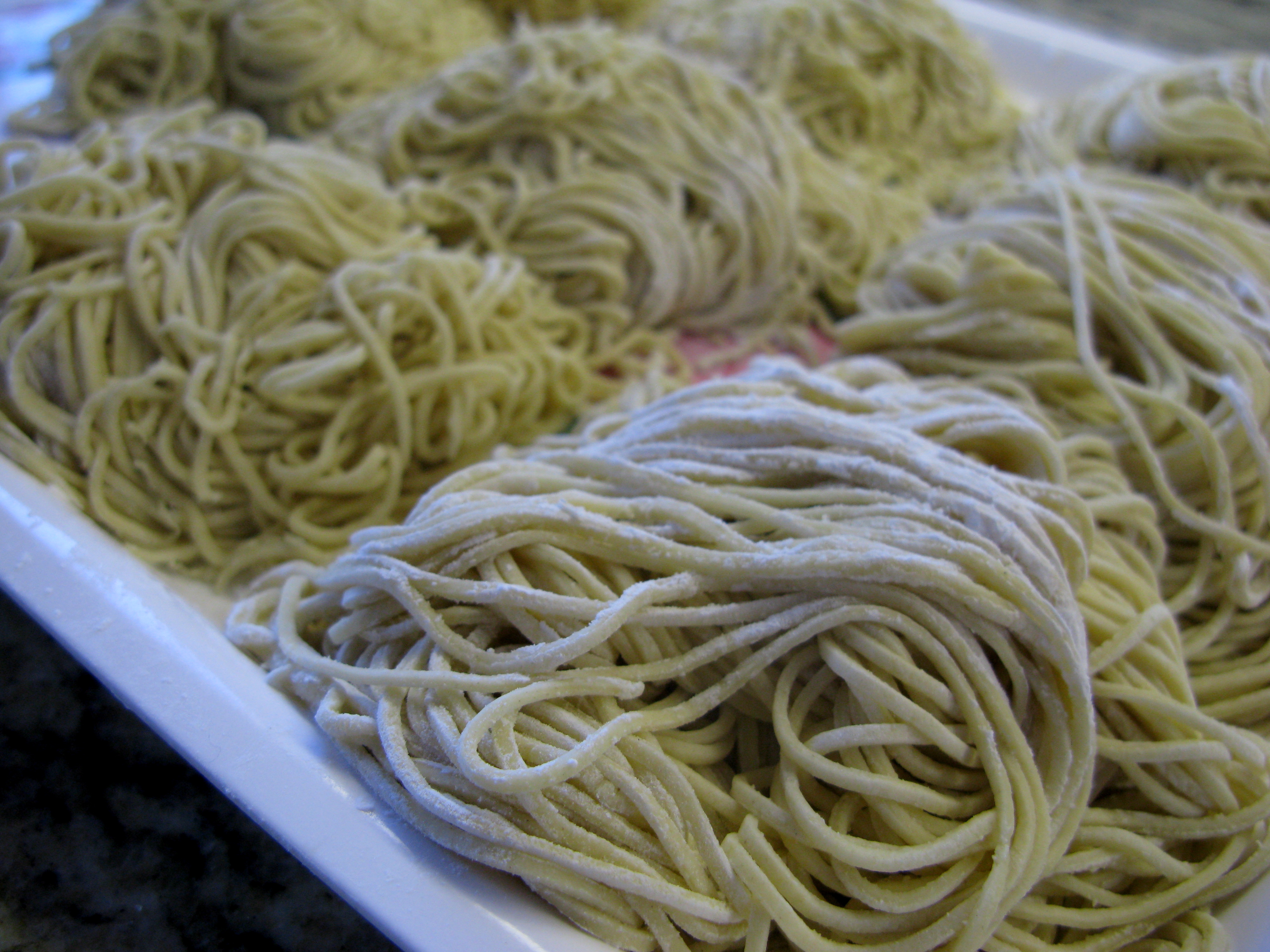
. The graphics are very funny -straight out of disco era Italy. Food has always been central in our home, and I learned how to crank out fettucini which we used in kal guksu at age 8. I was very proud of the ability to make especially long noodles. I decided to try to make a large batch to freeze some noodles for later.

Making the dough is again so basic and simple that it is meditative. Flour, egg, baking soda (homage to the alkaline salts of Central Asia’s deserts), and water, mixed to a tough ball, this time the size of one of those Vietnamese grapefruits. I remember thinking I should add another egg to get the yellowish hue, but am too lazy. The noodles come easily after an hour of kneading, an hour of rest, and an hour of pressing.
The soup was another issue. I have come across what seems to be a reasonable donkotsu recipe. The only problem was I bought only 2 ham hocks -no long bones were available at the local butchers. I boiled these with some ginger, garlic, leek, and onions, for 8 hours yesterday and got a pot of nearly pure protein. The flavor was okay, but not quite the full donkotsu taste. I experimented with flavoring with salt, soy, miso, miso+bonito, and found the last to give the best flavor.

Char Siu
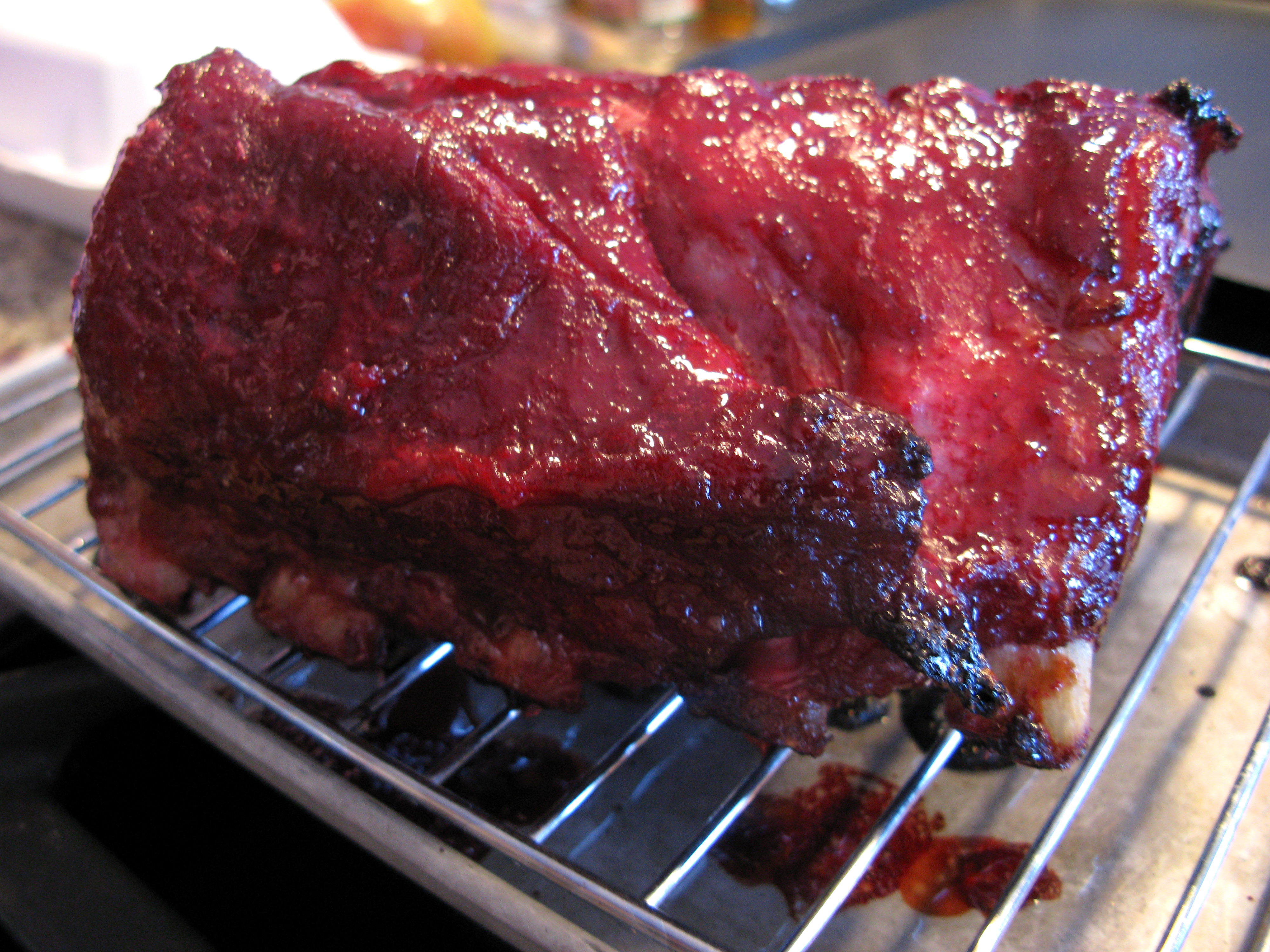
The pork from the hocks was pulled and set aside, flavored with salt and pepper -it’s delicious and I’ll be eating this separately with rice. I added some to the final ramen dish. One of the recipes calls for purchasing char siu from a Chinese restaurant. Char siu is commonly seen as the reddish pork barbecue hanging from hooks in Chinese restaurants in NYC, but you just can’t get it around here.
I called my friend who recommended using some off the shelf sauce and making it at home. I purchased a pork rib roast (with tenderloin on) for the purpose of cutting off the tenderloin for use with the ramen and eating the ribs for dinner. The char siu sauce (Hawaiian brand) was easily found at our local Asian grocery, and cooking was very easy in our convection oven. Our secondary convection oven is essentially an upright rotisserie, and roasts come out perfectly. The tenderloin provided a nice cut, but was not the same as the flavored Japanese-style roast pork.
The soup, now flavored as a miso soup, provided a mellow base for the ramen noodles which came out nice and springy, but definitely bland without the extra egg -it’s a lesson I’ll take to the next batch. The soup was garnished with char siu tenderloin slices, blanched spinach and flavored eggs. The marinaded eggs are soft boiled eggs left to sit in a marinade of Memmi sauce (a light sweet soy sauce that is used for creating a soup base), dash of sake, and chili peppers (my touch). These eggs were kept in a plastic bag overnight and cut in half with a string -creates a more elegant cut than a knife.
It was okay but not great. The soup has to be saltier and stronger prior to adding the noodles which dilutes the soup with some water. I am going to back off the donkotsu for a while and just get regular Yakibuta style ramen soup right. As a second effort, it is clearly an incremental improvement, and I learned how to make char siu. The ramen is not just noodles in a salty soup, but rather a kind of perfect kingdom of noodles, soup, and fixings. You want to get balance -the texture of chewing noodles and the intense flavor of the soup, the surprising pleasures of the fixings.
Today, I released Ramen 1.1. The ramen noodles area easy to make with the Atlas pasta press. In 1976, my folks purchased this from Macy’s for $45, which was quite a sum back then. Using an inflation calculator (link), this comes out to 167.72 today. The quality of this machine is astounding -I could stand on it and it wouldn’t break. The graphics are very funny -straight out of disco era Italy. Food has always been central in our home, and I learned how to crank out fettucini which we used in kal guksu at age 8. I was very proud of the ability to make especially long noodles. I decided to try to make a large batch to freeze some noodles for later. Making the dough is again so basic and simple that it is meditative. Flour, egg, baking soda (homage to the alkaline salts of Central Asia’s deserts), and water, mixed to a tough ball, this time the size of one of those Vietnamese grapefruits. I remember thinking I should add another egg to get the yellowish hue, but am too lazy. The noodles come easily after an hour of kneading, an hour of rest, and an hour of pressing. The soup was another issue. I have come across what seems to be a reasonable donkotsu recipe. The only problem was I bought only 2 ham hocks -no long bones were available at the local butchers. I boiled these with some ginger, garlic, leek, and onions, for 8 hours yesterday and got a pot of nearly pure protein. The flavor was okay, but not quite the full donkotsu taste. I experimented with flavoring with salt, soy, miso, miso+bonito, and found the last to give the best flavor. The pork from the hocks was pulled and set aside, flavored with salt and pepper -it’s delicious and I’ll be eating this separately with rice. I added some to the final ramen dish. One of the recipes calls for purchasing char siu from a Chinese restaurant. Char siu is commonly seen as the reddish pork barbecue hanging from hooks in Chinese restaurants in NYC, but you just can’t get it around here. I called my friend who recommended using some off the shelf sauce and making it at home. I purchased a pork rib roast (with tenderloin on) for the purpose of cutting off the tenderloin for use with the ramen and eating the ribs for dinner. The char siu sauce (Hawaiian brand) was easily found at our local Asian grocery, and cooking was very easy in our convection oven. Our secondary convection oven is essentially an upright rotisserie, and roasts come out perfectly. The tenderloin provided a nice cut, but was not the same as the flavored Japanese-style roast pork. The soup, now flavored as a miso soup, provided a mellow base for the ramen noodles which came out nice and springy, but definitely bland without the extra egg -it’s a lesson I’ll take to the next batch. The soup was garnished with char siu tenderloin slices, blanched spinach and flavored eggs. The marinaded eggs are soft boiled eggs left to sit in a marinade of Memmi sauce (a light sweet soy sauce that is used for creating a soup base), dash of sake, and chili peppers (my touch). These eggs were kept in a plastic bag overnight and cut in half with a string -creates a more elegant cut than a knife. It was okay but not great. The soup has to be saltier and stronger prior to adding the noodles which dilutes the soup with some water. I am going to back off the donkotsu for a while and just get regular Yakibuta style ramen soup right. As a second effort, it is clearly an incremental improvement, and I learned how to make char siu. The ramen is not just noodles in a salty soup, but rather a kind of perfect kingdom of noodles, soup, and fixings. You want to get balance -the texture of chewing noodles and the intense flavor of the soup, the surprising pleasures of the fixings.






 Golfism -life is a metaphor for golf