Park Icosahedron!

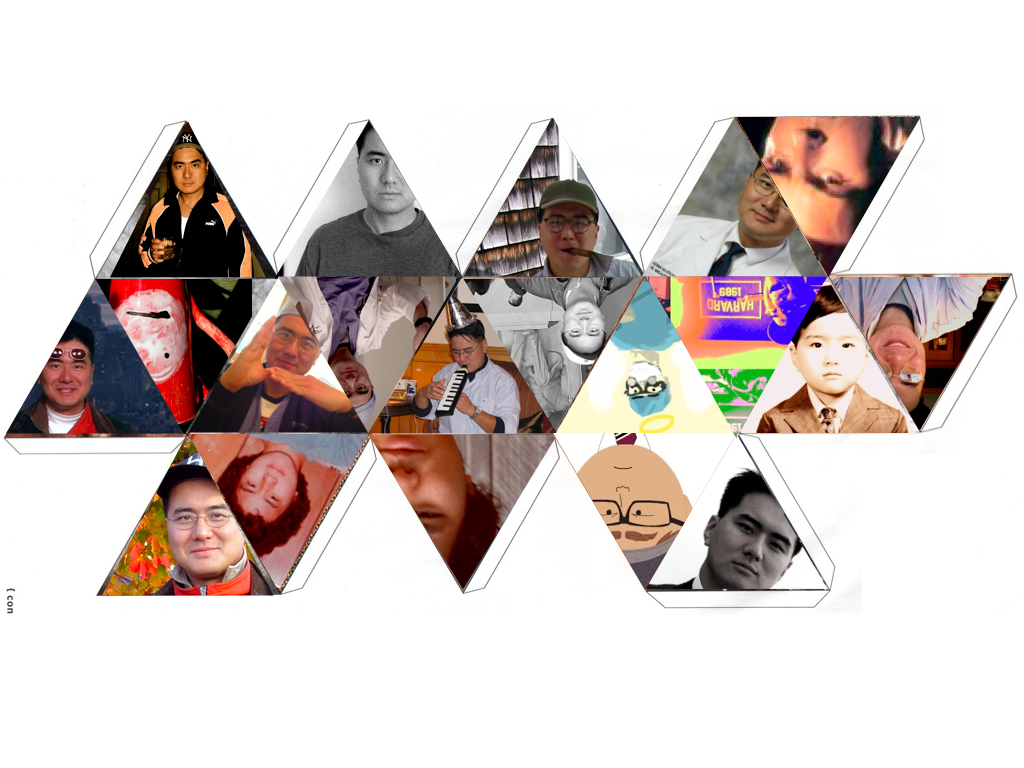
Amaze your friends by downloading and printing out the Park Icosahedron. Fold along lines and glue the tabs down to form the 20 sided shape of mystery.

You can make two, attach to string and hang if from your rear view mirror! My gift to you. A great way to spend time with your kids…and ME!

Augmented Reality -how to tell fake boobs

Every time I watch Mad Men, I get floored by Christina Hendricks. She captures the vavoom esthetics of the late 50’s and 60’s as personified by Sophia Loren. The standards of beauty shift and change over time, but the large mammaries and the male obsession with them are unique to humans among terrestrial mammals.

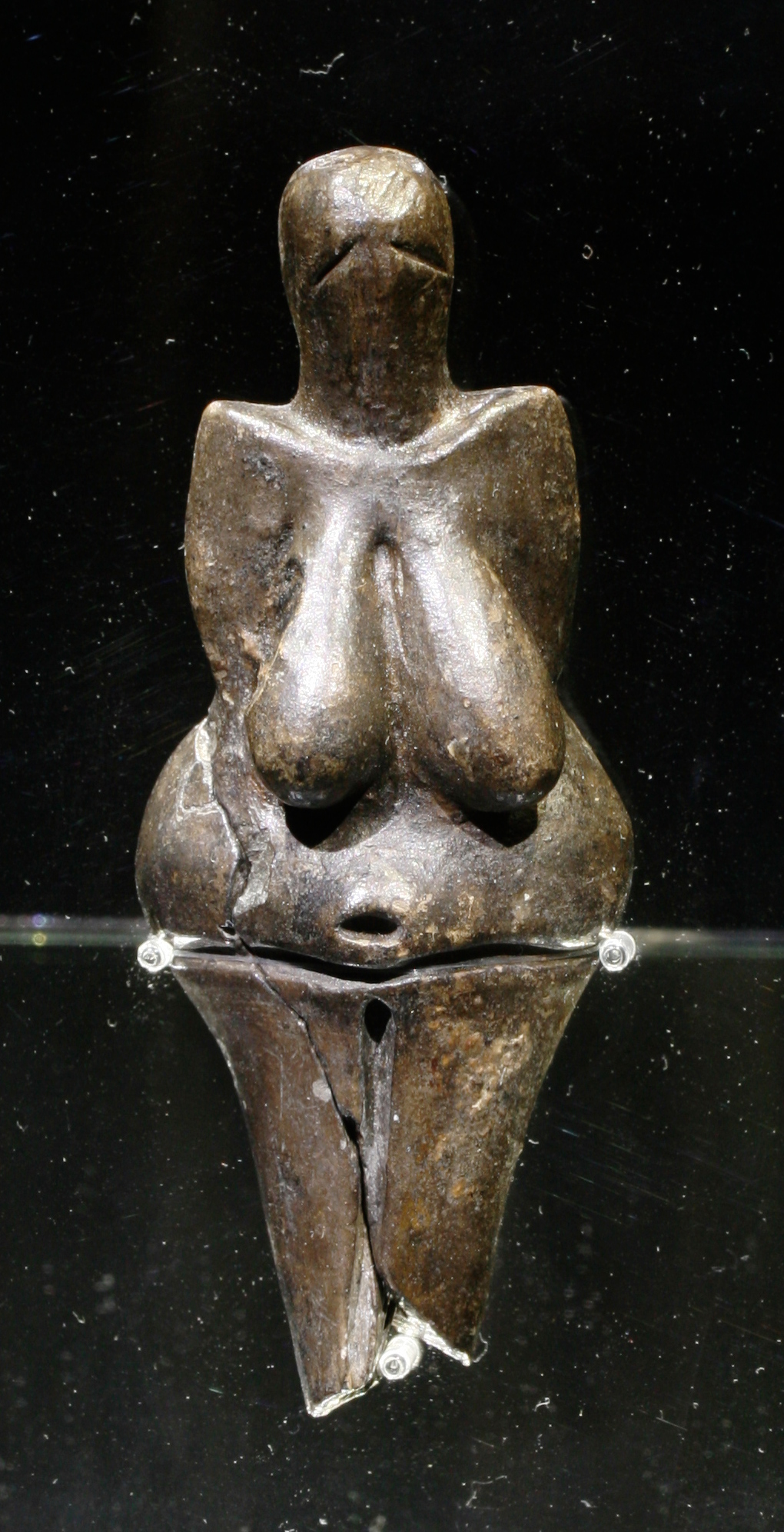
Neolithic hunter-gatherers, when they figured out how to shape stone into figurines, created an industry around figures of women with curves.

Breast augmentation is a large industry driven by not only popular tastes but probably something innate in our psyche. When I was an intern, the plastic surgery clinic was an eye opener, with perfectly healthy patients willing to undergo an operation at some risk to their health to sculpt themselves.

It was a time of transition away from silicone implants which were popularly (and erroneously) believed to cause autoimmune disease, to saline implants, and the quintessential moment for me was in filling what were plastic bags to the “correct” volume which was a subjective process. The whole OR got to voice their opinion with the surgeon having veto power.

With the recent red carpet productions, Christina Hendricks came up and it hit me that she looked different from when she was on Firefly, my favorite cancelled science fiction series. In it, she is incredible as an interplanetary highway robber and grifter. Five years later, she presents an entirely different profile.

At first, I thought she achieved her transformation with girdles and a few extra doughnuts a day, but the picture at the very top convinced me that some augmentation has occurred. When I mentioned this among my Facebook friends, TW, an old buddy from high school and a physician, categorically felt that these were real.

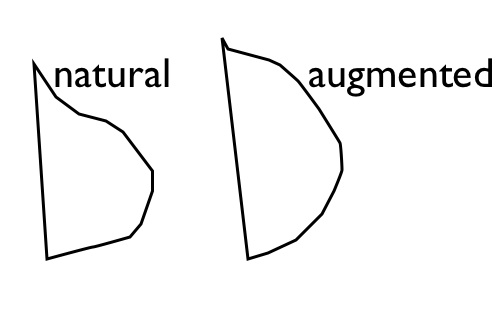
After intensive research, I would have to disagree. The tipoff are the bald men hiding in her dress. The placement of prosthetics causes a lifting of the skin and sometimes muscle which changes the profile from the “natural” which in profile looks like a nice sledding hill to the “augmented” which looks like a bald pate. This convexity is a giveaway, and with the lift and separate presentation bras, this convexity is enhanced. Gravity flattens this top area with time and no convexity is seen in latter day images of the all natural Sophia Loren who looks like she underwent some reduction.

That said, Hendricks is amazing in bringing her character to life, a Sad Woman among Mad Men.

The Personality Disorder -Which One Do You Have?

Girl Interrupted, or Bucket O' Borderlines

When I went to P&S, one of the great features of its curriculum was its Psychiatry requirement which spanned a full two and a half years of our time there. It was among my favorite experiences from medical school. In that first year, among other things, we discovered how really crazy we all were, each of us, in our own special way. It was then I discovered the DSM Personality Disorders, which is kind of an “interesting personalities” index. Rather like a Zodiac sign, my pals and I immediately set about viewing those around us through the lens of their particular personality disorder. People rubbing shoulders in large cities brings out these personality disorders like rubbing oregano brings out its spicy aroma.
According to the DSM-IV-TR Axis II (the 4th edition of the Diagnostic and Statistical Manual of Mental Disorders), the person with the personality disorder has to meet first the general criteria of having “an enduring pattern of inner experience and behavior deviating markedly from the expectations of the individual’s culture.” This is a very interesting criteria because it implies the existence of whole cultures that are crazy and where that flavor of crazy is normative (think Klingons before the Khitomer Accords). It also implies that whole families may be crazy, but within the confines of that family, one’s crazy behavior may seem “normal,” and children from such families only realize how abnormal their families are once they leave for college. This is not a personality disorder if the individual realizes that yelling their frustrations is not normative and corrects that behavior. This is an important feature of the general diagnostic criteria -that  two out of four deviations go unrecognized in terms of cognition (self perception and interpretation of others and events), affect (range, intensity, lability and appropriateness of emotional response), interpersonal functioning, and impulse control.
Also in this definition, this personality pattern is inflexible and persists along a broad range of personal and social situations, leading to distress or impairment in personal, social, and occupational functioning. This pattern is persistent and present for a long period of time, and not secondary to another primary mental disorder, substance abuse or medical condition. It means the person affected by a personality disorder may or may not be aware of their “deviation from the norm.”
The personality disorder list is then grouped into three clusters with subcategories.
Cluster A (odd or eccentric disorders)
-Paranoid personality disorder
-Schizoid personality disorder
-Schizotypal personality disorder
Cluster B (dramatic, emotional, or erratic disorders)
-Antisocial personality disorder
-Borderline personality disorder
-Histrionic personality disorder
-Narcissistic personality disorder
Cluster C (anxious or fearful disorder)
-Avoidant personality disorder
-Dependent personality disorder
-Obsessive-compulsive personality disorder
Appendix B -for further study
-Depressive personality disorder
-Passive-aggressive personality disorder
Deleted from DSM IV but present in DSM III-R
-Sadistic personality disorder
-Self-defeating (masochistic) personality disorder
The key point in personality disorders is that their conditions are considered out of the norm but not completely incapacitating. Most people have some degree of the above characteristics, and the differences in the ingredients results in the person. The PD-afflicted individual has one of the above characteristics in superabundance, resulting in flawed social interaction. Through this year, we’ll go through the personality disorders and figure out why some people behave the way they do.

The Automaton, a simulacron of a great golfer

I have changed my mind about Tiger because I thought the man and the player (of golf) could be separated. I have decided that Tiger is no longer the greatest to have played the game. Through his actions, he has shown himself unworthy of the game which values moral and ethical behavior. The Rules of Golf are not just a list of crimes and punishment, but assume an internal moral compass that guides player. Players who abide by these Rules elevate themselves in the process. This includes players who call penalties on themselves on trangressions witnessed only by them. This valuing of honesty and ethical behavior is unique to golf where players have famously penalized themselves out of championships or, tragically, tour cards.

If Tiger behaved this way off the course, who knows what guided his behavior on the course in relation to golf. You can obey the law out of fear of punishment or out of internal ethics and morality. Tiger is no golfist, but revealed to be the golfing equivalent of Deep Blue, the chess playing supercomputer, a soul-less automaton. The events of the past several weeks shows that Tiger has no moral compass, and excels at this great game for entirely banal reasons of conditioning and training from childhood. By this measure, the average golfer who takes stroke and distance for going out of bounds even when playing by himself is a greater custodion of the sport than Tiger.

Cart Path of Destiny

img_0198Only 10 more days until they unleash the dogs onto Wakonda’s newly resurfaced fairways and greens. The loss of old growth oaks around the greens to ensure 8 hours of summer light may signify changes in the character of the course or just a hair cut. I favor the latter.

I recently started following Twitter and was amazed at the ability to narrowcast my interests to a likeminded group of people. The story of the week is Staff Sergeant William Vile’s disappearance -he is officially MIA (link). The action resulted in US casualties -follow it on http://www.milblogging.com and http://www.bouhammer.com. Political persuasion aside, you have to hear it from the people on the lines to make an informed opinion. As much as Huffingtonpost amuses me, to rely on any single news channel (includes you people tuning Fox in the doctors’ lounge) invites tunnel vision.

We’re on the 7th hole of 2009, and we’re going about 4 over. Hopefully, we’ll finish out this nine with a few birdies, including finding SSG W. Vile.

The Masters, of golf

img_1526The picture above shows a buff President Washington with a six pack posing as Zeus, king of the gods. This kind of florid, frankly, but likely unknowingly, homoerotic display, was typical of the 19th century men who commissioned this work. These men were confident in their mastery over the land and its peoples; they were sure of their place in the world. This kind of confidence brought about the American Century (the 20th) and colors us to this day. It was men with this uncluttered view of their place in the world that brought us Augusta National and the Masters. The neocons that ran purple rampant this past decade hark to this tradition, but I digress. It is dangerous to apply the morals and ethics of the moment to the decisions and actions of the past, just as it is to do use the morals and ethics of the 19th century to view the situations of the present. The beauty of Augusta National is something to behold, at least on television in High-Definition. But like an old line Southern family, there are a lot of bones in those closets. The Masters is a perfect bellwether of America’s difficult relationship with race, gender, and elitism. The Masters transcends golf, but because of golf, it is saved.

As a tournament of golf, the Masters, conceived and founded by Bobby Jones, is unique among the modern major golf tournaments in that it is held in the same place every year. This conservatism is the outward manifestation of a deep conservatism in the membership, and from its founding, the world view was  antiquarian and antebellum.

On one hand, it means that the very spot where Sarazen hit his shot heard around the world is an actual spot that you can see during the tournament. Past champions, members, and gallery attendees provide a living link all the way back to Jones, and the founding of golf in America and Britain. It also is a tournament that until several decades ago, insisted that only Augusta National caddies looped for the players -they were all African American wearing distinctively white overalls. This visual from my childhood of white guys strolling with black guys in crazy white mechanics uniforms carrying their bags in a tournament in Georgia called “The Masters” gave me clear notice as a teen in Jacksonville, Florida in the 80’s where progress really was.

This kind of haughtiness lampooned in Caddyshack but not half as funny when the membership’s frostiness to the brown skinned Lee Trevino caused him to let anger keep him from performing to his prowess at the Masters -he even boycotted it for two years and called it a “stupid course.” This is the thing -in America, up to the 1980’s, the popular media normalized blacks with such shows as the Jeffersons, the Cosby Show, and Urkel, but the Masters bucked the trend and showed where we really were at that time. When I was in high school, the San Jose Country Club, where my golf team practiced, was the site of a choral recital. An old lady (white), walked out of a concert there because several members of the chorus were African American. Restricted meant no blacks, Jews, or Asians. A club had fallen on hard times indeed if it let me in -and indeed, this was the kind of club we joined -Baymeadows in 1983, to get easy access to golf.  It also played into that club’s view of diversity having some “Chinee” in the locker room. The club has since closed down due to stress in the real estate market.

This changed slowly. In 1975, Lee Elder, played at the Masters, breaking the color line. In 1983, the requirement to use Augusta National caddies, uniformly African American, was rescinded -which had the unfortunate side effect of the African American caddies disappearing. The tsunami then occurred in 1997 with Tiger’s lopsided victory, but even there, the line was being defended, by Fuzzy Zoeller who stupidly had to make that remark about serving fried chicken.

“He’s doing quite well, pretty impressive. That little boy is driving well and he’s putting well. He’s doing everything it takes to win. So, you know what you guys do when he gets in here? You pat him on the back and say congratulations and enjoy it and tell him not to serve fried chicken next year. Got it.” Zoeller then smiled, snapped his fingers, and walked away before turning and adding, “or collard greens or whatever the hell they serve.” (ref).

It cost Zoeller millions, but it was clear that it was the Freudian slip of a significant part of the nation. I don’t think there is a cross burning, lynching, evil-redneck bone in Zoeller’s body and his life of gentlemanly behavior on the course redeems him. The towel waving at the 1984 US Open was beautiful and epitomizes and elevates the game. He was joking, and he is known to be a joker, but in serving up Don Rickels at THAT MOMENT made Tiger’s victory all the more poignant.

It is telling that Augusta National in the years since Tiger’s victory, worked very hard to lengthen and strengthen the course. As if a fortress, once overrun decides “never again” by digging deeper moats and higher walls. The course which was suppose to be timeless, was lengthened in response to modern equipment. But modern equipment had been around since persimmon was dropped for graphite then steel then titanium, way before Tiger. The rough which had always been short, had allowed for a greater range of risk-reward, is now US Open style growth -the kind that gets you in trouble with not only the wife but also the neighbors if you forget to mow. This because of Tiger who has won four Masters.

The current battle is over the admission of women. This is not a problem at many clubs because of finances have dropped class, race, and religion for simple money, but it remains in the strange custom of Ladies Day -usually Tuesday after the club is mowed on Mondays. Meant to reserve the course for women as a tradeoff for restricting them from play on the weekends, it is a shameful reminder of the same antediluvian instincts that created exclusive clubs in the first place. The solution is very straightforward and fair -if you can’t play a hole in 10 minutes, you shouldn’t play on the weekends during prime time. And this is the strange thing that I have discovered in using Augusta National as our bellwether. Its accuracy is undoubtable -we now have an African-American President a decade after Tiger’s acceptance into Augusta National. Augusta’s line on women members reveals the last true fault line -one that I had frankly doubted in many heated college dorm arguments with feminist friends. The lady, my friends, is the last nigger.

So why do we watch the Masters despite its failings? It is the golf, of course.

Golf doesn’t care about your race, your viewpoint, your class, or gender. It’s the ball going from here to there, and its story a perfect mirror of your character and integrity. Life is not perfect, and nobody’s golf is, but golf holds out the promise of a more perfect round, and really a more perfect individual and nation.


My Picks:

The Iowans: Zach Johnson and Jack Newman

The Korean-American and Korean-Kiwi: Anthony Kim and Danny Lee

The Irishmen: Rory McIlroy and Padraig Harrington

The Cablinasion: E. Tiger Woods

The Chicago Cubs: Phil Mickelson and Greg Norman

and my final pick:

Fred Couples -I have modeled my swing intentionally on his effortless mechanics since I was a kid watching Boom Boom take the TPC in 1984 -I was there.

The Mysterious Montague

John Montague was for a time the most talked about golfer in America, despite never having competed outside of his club championship. He was a member of a club in L.A. during the Great Depression where he hobnobbed with the likes of Howard Hughes, Oliver Hardy, and Bing Crosby. It was said he rarely shot above 70, and drove the ball over 300 yards using the equipment of his time. He could lift Oliver Hardy over the club’s bar with one hand, and he defeated Bing Crosby who was scratch using a baseball bat, a shovel, and a garden rake. The first hole at Lakeside was a par four which Bing reached in two and two putted using golf clubs. Montague tossed the ball and batted it over 340 yards to the greenside bunker, shoveled on, and using the garden rake as a pool cue, curled in a 12 footer for birdie, whereupon Bing cried uncle. Turns out, Montague was hiding a secret past that erupted when a member at his club, a prominent sports writer, broke the news of this phenom that avoided publicity, who on the verge of breaking the course record at Pebble Beach, picked up the ball to avoid the ensuing publicity. You can read about him in the book The Mysterious Montague by Leigh Montville (Random House).

The overwhelming conclusion that I reach from reading the book is that Montague was a golfist who reveled in the pure joy of being on the links, of the fellowship it afforded him, and the ecstasy of tracing that perfectly hit ball.

The Master

I took a lesson with Mr. William Rose, emeritus golf professional of Wakonda Club. He is a walking treasury of golf. He once spent two hours at Bobby Jones’ residence where they had a fascinating conversation about everything but golf. Mr. Rose has that knack for distilling golf knowledge into the simple facts. Thirty minutes on the range with him resulted in untwisting of that nasty duck hook and introduction to a controlled power fade, which I always thought was the better shot to have if you plan on trying to pinpoint your shots. With a slight adjustment, I still had my draw which I hammered out against the far fence on Fleur Drive. What I enjoyed immensely was the time spent with Mr. Rose who is a one degree separation from the deep roots of golf. Through him, I am only two degrees of separation from Harry Vardon, Francis Ouimet, and Gene Sarazen (through Bobby Jones). He personally trained club pros that went on to staff many of the elite clubs throughout the nation. And above all, he is a great human being.