
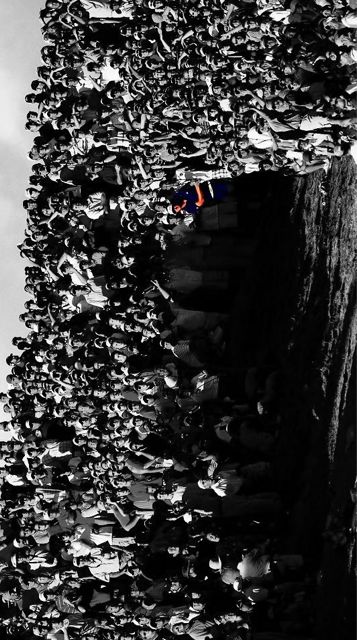
At the Living History Farm with our Cub Scout den. This is the type set for the Advocate, the town’s newspaper. Amazing that I can deliver internationally in a few seconds on my smart phone.
At the Living History Farm with our Cub Scout den. This is the type set for the Advocate, the town’s newspaper. Amazing that I can deliver internationally in a few seconds on my smart phone.
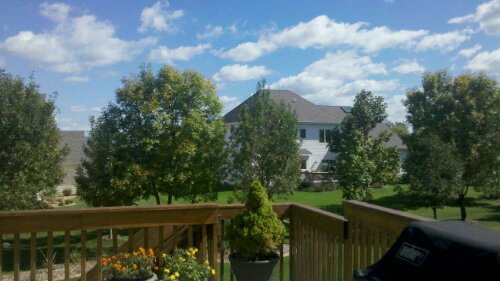
Coined by Jen, the skies here in the midwest take amazing hues and colors that are different from the coasts. The fluffy while clouds on the azure background reminds Jen of a Magritte painting.

My Mother
The Last Days
I spent the last three nights preceding my mother’s passage at her bedside. I really had nothing to offer except approve the medications which would bring her comfort in her final struggles. Although she had accepted dying, her body’s underlying circuitry fought it and sent signals of alarm to her senses. I asked the excellent staff at the Mike Conley Hospice House to give her morphine and Ativan at doses that would ensure that she would not be aware. That first night, when she would acknowledge my presence with opening of her eyes, I said my goodbyes. I told her I loved her, and I thanked her for all the care that she had given to me to put me in my place in the world. As they were cleaning her, as I was leaving the room, she opened her eyes and locked eyes with me with an intensity I hadn’t seen for months. She nodded her head, and closed her eyes. That was the last time I communicated with her.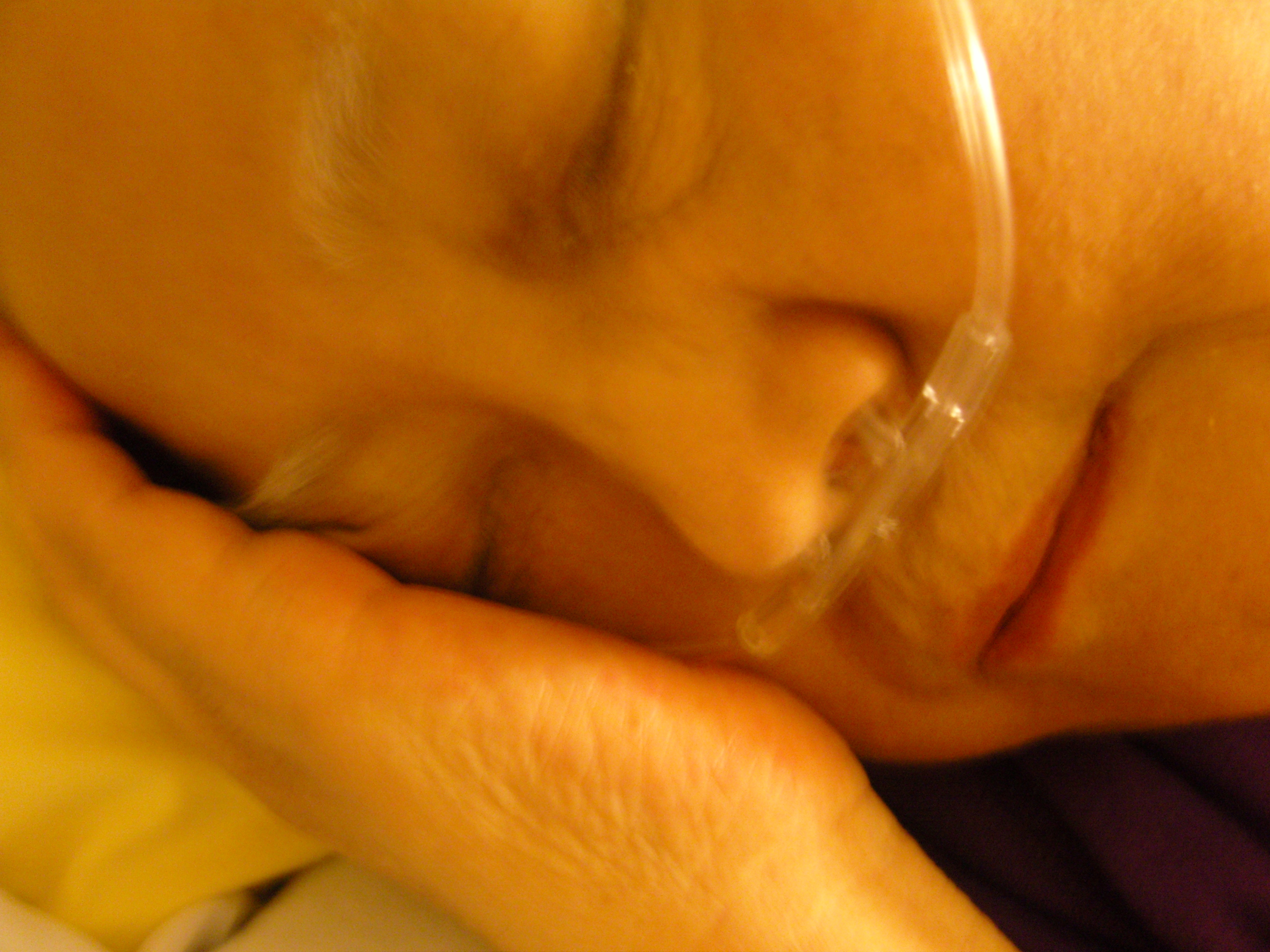
The following two days were spent waiting. Her antirejection medications had been stopped and even without a stethoscope, I could hear the rattling of her good lung, the gift from a young woman whose family saw the good in giving life in the midst of tragedy. I thanked them again for the two and a half years that gift gave us. She was able to see my older son grow from a large toddler to a tall, happy boy only a few years from young manhood. She saw the arrival of my youngest only a few months ago to great happiness. The extra time that gift afforded was priceless.
As the breathing failed, so did the kidneys as she had stopped swallowing, and her blood pressure waned. I knew the time had come on that final morning when I was roused by the oncoming day shift nurse. My mother was beginning the agonal respiratory pattern I had seen so often before in my training and my practice, but this was so different. I called my sister, my father, and my aunt. My father who had been by her bedside every day after her transplant for 4 months, until he himself had a heart attack and needed bypass surgery, who had changed her and bathed her for the better part of a year, told me he didn’t have the heart to watch her die. I hugged him and told him that I would be there, and my sister, and my mother’s sister agreed as well to help my mother through her final passage.
The end came after noon time. Again, I watched her breathing impassively -shallower and more desperate as her head tilted back to gasp at the air like a fish left on the dock. I had to tamp down the urge to jump and start all the motions and actions that I had trained for years to do, and that left me reduced, small, and I was a little boy again. As her last breath came, I could swear she said something, mouthing something, but I couldn’t understand. And then it was over. I felt her pulse and called it at 2:20pm.
The Condition and the Treatment
My mother was visiting us in 2005. We had moved to Des Moines and it was a Christmas visit that was also a medical one. She had a chronic cough and had had CT scans and pulmonary workup in Florida, but wanted definitive care at my hospital where I could be around to help.

Mother, early 20's
I asked one of my partners, Dr. Marnix Verhofste, to perform the lung biopsy which the pulmonologist, Dr. Michael Witte, had recommended. As she was recovering, the diagnosis came back, and it was not good. Idiopathic pulmonary fibrosis -idiopathic because its cause is unknown and its treatment was lung transplantation.
She was started on oxygen and for the following years, it wasn’t terribly bad as her oxygen needs weren’t too taxing and her quality of life was good. She was not keen on transplant, but a conversation with another patient at a pulmonary rehab center in Orlando convinced her. He said, “Just do it.” She wanted to be listed. It was summer of 2007, and she told me that she wanted more life. That she wanted to see my son grow a few more years. At that point, she was on oxygen all the time and panted going from bed to bathroom. We took her to Mayo Clinic in Jacksonville, Florida, where the excellent team lead by the indefatigable Dr. Cesar Keller worked her up and got her listed. Almost as soon as she was listed, she began deteriorating rapidly, and it seemed that she would die while waiting, but miraculously, we got a call in early 2008 that a lung was available. She was given a single lung transplant by Dr. John Odell, and initially it seemed to go well, but she was unable to stay off the ventilator. She required a tracheostomy and it was found that she had an injury to the phrenic nerve, paralyzing her diaphragm. As a surgeon, I understood how fragile that nerve is, and that sometimes, its function would come back.
She recovered slowly but had other setbacks including a decubitus ulcer, loss of continence, and need for tube feedings as her swallowing was deranged. In the span of three months, she seemed to age twenty years. My father never left her side the entire time, and it took its toll. As she neared discharge, he developed chest pains that he ignored until he became incapacitated by it. He was taken to the cath lab and then to the OR. I arrived in Jacksonville with both parents critically ill. As they recovered, it was clear that they could not stay at home in Clermont, and I was at a loss for how we would get them both back to Des Moines. It was suggested by one of the staff that I rent a mobile home. It was a memorable family road trip driving back to Des Moines that June.
She never fully recovered. It started with eating -her teeth fell out that summer and the first set of dentures caused her to gag and vomit. The second set didn’t help and her weight dwindled and we had a PEG placed by Dr. Ryan Cook, interventional radiologist. This brought her weight back and we figured out a liquid diet regimen. That said, she was never the same. When she looked in the mirror, she was shocked at the transformation the seven months had wrought. My dearest memory from that summer as a dai-shikgu -large family, she decided to cook steamed trout with a ginger, pepper, soy sauce that I still remember to this day.
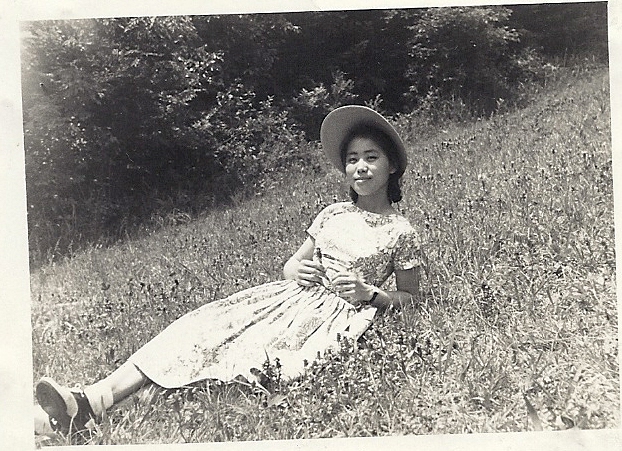
Mom, in high school
The following two years was a series of hospitalizations and medical emergencies that put great strains on my father. When she became jaundiced this past spring, I think she decided that it was time. She stopped walking and became bed bound. We visited her at the end of June to introduce her to her newest grandson. I knew that it was near. I told her, “As long as you eat your formula and drink, you’ll be all right.” She looked at me and I could tell that she was making a decision not to eat so much.

Mom, sewing
A final visit to Mayo brought the understanding to my father who was in a great deal of denial that she was dying. Hospice care was arranged for, which he resisted but assented to after some discussion. She resisted eating, but was fastidiously clean to the end, insisting that after every diaper change that she be allowed to wash up, that every stained clothing or blanket be washed. I visited her twice, the second time with my older son who had a chance to say goodbye. It was the third visit that I knew was a final one, and even then, I almost didn’t come down if it weren’t for the insistence of my partner, Dr. David Chew, who said it was my place to be with her.
Grieving
Grief is not just an emotion but a physical condition. It rains down on you and sticks to you, weighing you down. I understood the images of ancient Greeks who rended their garments and tore at their hair. I wanted to scream but nothing came out but a groan and tears, lots of tears. The spit dried and I felt I was choking. This lasted about ten minutes, and I called my father, who came and grieved as well. My sister and aunt, we all hugged in shared grief. The clinical distance and measured empathy I always had with sick patients and their families -gone. We waited until the hearse came from the funeral home, and then went to dinner. In the distance, over the hospice, we saw a miraculous rainbow.
A Life Deferred
My mother was born from a well established family in Seoul whose fortune came from land that survived Japanese occupation

Mom, age 1
and the Korean War. Her parents generation dissipated that fortune leaving her generation to strive. Her brother went to medical school with my father, who became enamored of her, and after a brief courtship, they married.
The first years of marriage were difficult for my mother who entered my grandfather’s household as the wife of the second son in a large household which required a lot of work -cooking, cleaning, and washing took up so much of her time and she lost so much weight that it was clear that my father had to  take her out of that situation. I was born after the miscarriage of an older brother who died soon after birth. We immigrated to America in the winter of 1971 to New York, our Ellis Island was Hawaii where I remember our precious oranges being confiscated. That first year was hard as I never saw my father who started an internship at the Knickerbocker Hospital in Harlem. When my sister was born, my mother went next door to the neighbors to watch out for me and she walked to Roosevelt Hospital. I woke to an empty house and I walked over to the neighbors -the gentleman was a classmate of my father’s, and I had a fried egg and chocolate milk.

Mom, Dad, and me
She devoted her life to raising my sister and me while deferring her own life. My sister and I still discuss whether it was a choice made from sacrifice or from a passivity that we also acknowledge that she had. She was a traditional Korean wife and mother who was firm in establishing priorities -for me, it was to go to Harvard and become a doctor, but also to become a good person -a human being as defined in the old Korean sense of someone worth the title. When I got into Harvard, we went to Korea and there was a reunion of her high school class, and they gave her a standing ovation as she outshone all the ladies who had gotten their sons into Seoul University -I think this was the high point of her life.
While I was growing up, I never wanted for anything because of the sacrifices of my parents. I saw it as a terrible burden, but now in retrospect, it was an incredible gift. She was gearing up to play a similar role for my sons when she fell ill, and I think that my older son will miss her terribly. She took care of him as an infant, sleeping with him to give my wife Jennifer a break, and she made me promise that I would give my sons the same effort and consideration that she gave me.
She did not write great novels or achieve great fame. She never finished college which she was acutely sensitive about, but she never stopped studying. We have boxes of her English textbooks that she studied vigorously, hoping that through effort she could master the one thing that she felt was deficient. And bike riding -she never rode a bike because she was told it was unladylike in the draconian confines of her childhood. So she said, but my sister and I figure it was something that was self imposed. She was rigid that way. Her mother, in fact, was a tennis champion in college. She was the keeper of a very old flame, an example of the old Korea that no longer exists.
I suppose what made her great was that she was my mother -one who could cook like no other and would stay up to make sure I got home. One who read to me every day during childhood and got me to Cub Scouts in a pressed uniform. One who even in her waning days would notice everything about me, who knew my moods and my tendencies before even I was aware of them. I will miss her terribly as I think about all the things she turned down or postponed to make sure that I got to achieve, see, and do great things.
Hope
The rainbow after her death raises a perennial question for me. The scientist in me says it is simply a coincidence, but the human in me marvels at the sight and its proximity to my mother’s passing. It gives me hope and fills my heart with the kind of strength that my mother’s wonderful meals used to. I can only think of it as a final gift from a loving mother.

Mom, 2006
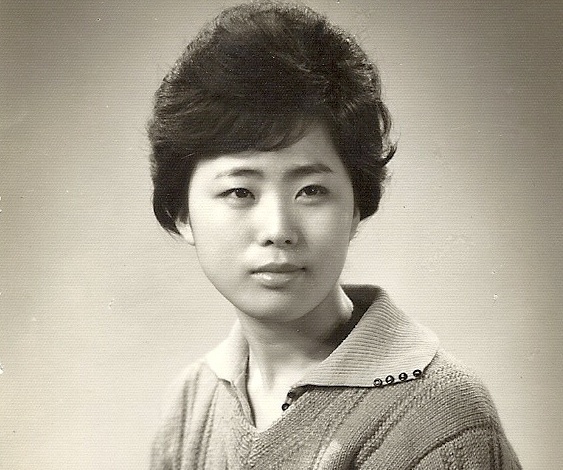 April 5th, 1941 to September 7th, 2010. Memorial serviced to be held at Woodlawn Memorial Home (link), Gotha, Florida on September 11th, 2010 at 12pm.

In some parallel universe of his choosing, Dustin Johnson would be a two time major winner. Instead, by his sin of ommission, he will be burdened with the mark of Cain for the remainder of his career. Dustin Johnson tried to get away with grounding his club in a bunker on national television. That is the only conclusion I can come to after seeing the video yesterday. The players received notification prior to starting the tournament (and it was posted in the lockers) that all of the bunkers, even the ones trampled by spectators, would remain bunkers. On addressing his approach after slicing his drive to the far right, he grounded his club but then stepped away as if he noticed he made a serious mistake. He can be seen considering the situation, and he hit his shot without grounding the cub a second time.
After his round, he was brought upstairs to review the tape in a scene familiar to shoplifters and mall cops. I have no doubt that Mr. Johnson is very talented, but his narcissism was revealed for the scrutiny of the voyeurs. His profession is to compete and uphold the rules of golf. Ultimately, the golf must come from a pure place. The PGA saved itself a lot of controversy by taking care of the issue before any playoff ensued. By signing his card, Mr. Johnson signed his confession. This burden will be his albatross and may end up consuming his swing thoughts, but I doubt it. If he is to compete again at this level, he will have to be continue in his selfish, thoughtless way, with total focus on dominating and winning. Champion golfers are different from you or me, and I think Mr. Johnson will redeem himself in this world.
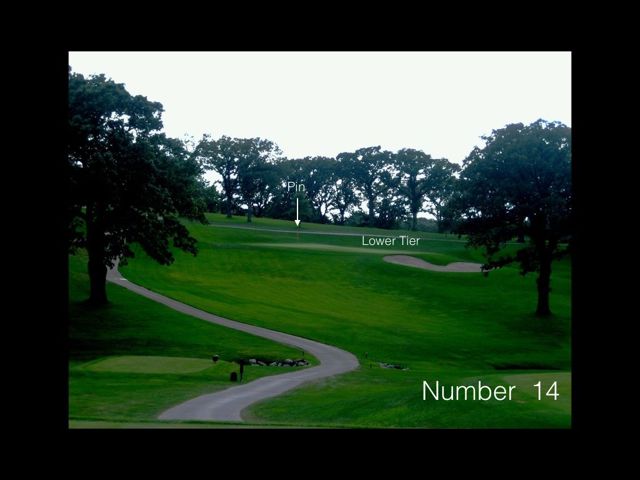
“Like targeting womp rats back home,” or so the quote goes from Star Wars. Luke Skywalker was referring to the ease with which he he used to vaporize small desert rats, intimating that the small exhaust port on the Death Star was no big deal. At Wakonda, we have our womp rat. Actually, it’s a heavily defended thermal exhaust port.
The fourteenth hole at Wakonda is a Rorshach test of a golfer’s mindset. From the blues, the hole is about 165 to the middle of the green. The prevailing winds are left to right. The problem is the three foot differential between the upper and lower tiers. Also, there is about a two foot drop over a thirty feet length going from back to front. This means that balls tend to roll right and off the green.
The pin position shown is front left. Depending on the mood of the greenskeeper and the pro, the pin can be placed right next to the precipice. This translates into a challenging two putt from below the cup. Anywhere else and a three putt bogey is a relief. In terms of score, this little bantam of a hole behaves like a par four or five, leaving grown men with tears.
Success on this hole requires command of your swing and fearless putting. Ideally, you want to hit into the fringe up front with a draw and roll onto the green below the hole. My ball ended up with a fade, landing hard in the center of the green, on the incline, which squirted the ball hard right and off the green. My chip landed short, sending my ball rolling back to the right fringe. A long putt failed the hill climb and three more putts later, a 6 was my reward.
Among rice eating nations, there is a common dish that translates across national boundaries. Basically, you have leftovers and some rice. You chop up the leftovers and mix it up with the rice. Paella, risotto, fried rice, rice and beans with plantains and chicken, it’s peasant food that when done well is satisfying and sublime.
Bibimbap fits in this culinary niche and I remember eating whatever mom had chopped up and mixed with the rice (bokeumbap), but bibimbap is far more refined. Whenever I go back to New York, I head straight to Korea Town (the one in Queens is better but the one in Manhattan is more convenient), and over several days I fit in several of my favorite dishes. Bibimbap is right up there. Here in the Midwest, it’s hard to get to Korean food, so videoblogger Maangchi has become an irreplaceable resource for second generation folk like me who never had the time to learn the dishes that really make me who I am.
Pictured is my latest effort from Maanchi following her recipe with some personal flair. It is missing bellflower root which I’m okay with but many would consider it sacrilege not to have it. I shrug because that misses the point of bibimbap which is all about quickly throwing together little parts to make a great meal.
Link to Maangchi’s recipe.


Waiting for the faster group behind to play through
I was recently invited to play at Des Moines Golf and Country Club by my neighbor down the street. It was over the July 4th holiday, and I expected a crowded course, but rain kept everyone but the most serious golfers away. I played with JD, and we invited two other friends to join us, and the round was memorable for this.
A twosome came up to us on what had been an empty course, and we let them pass with a smile and wave. They thanked us, and played on with little delay, bothering us not at all. This little interaction speaks volumes about golf etiquette and why I’m so passionate about golf. Everyone there understood the rules and the conventions of play -the faster group is allowed to play through. When playing through, you understand that it’s a gift, and you play briskly and thank the group you’re playing through.
This is all taught, and universally understood. If only the world at large played in this way. It used to be that everyone went to the same schools and had a common civic culture that emphasized the importance of public life of the citizen. Then things became atomized and it’s difficult to find the same levels of socialization. Today, the country is split along socioeconomic class lines that make collective action for the public good difficult or in some cases impossible.
Life really is no different from golf -for a society to function well, there have to be not only laws but unwritten rules.
Addendum:
I am finally getting the Pete Dye greens. Where old line courses like Wakonda’s will have one general slope split by a secondary slope to the terrain, Dye placed topography creating miniature maps of mesas, plateaus, lowlands, and valleys so that two changes in slope will occur not within 30 feet which is typical of most courses, but within 5 to ten feet. He also emphasized the artificial organic -think avant garde white plastic furniture from the late sixties. Wakonda is art deco like the Chrysler building, 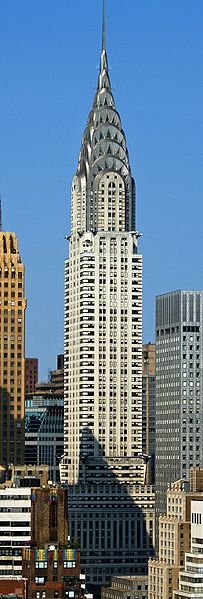 while Des Moines Golf and CC’s Pete Dye layout is decidedly modernist like 2 Columbus Circle before it’s renovation.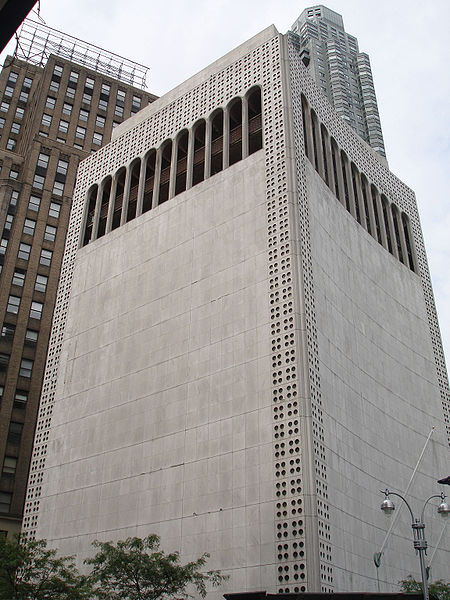
Nothing wrong with it. The important thing was, after this epiphany, my putting improved because I looked for the giant beach ball buried in the green above the buried giant banana.
Speaking of which, putting has become the center focus of my efforts this summer, and it is beginning to pay off. I started a miserable 9 holes earlier today at Wakonda, going 10 over through the first four holes, and finished the latter 5 holes at 2 over after I turned on the putting. The key today was emphasizing the putting stroke as a stroke, with putting as a process, and focusing on seeing the line.
 Chalk this up to the weirdest thing to ever happen to me on a golf course. I am a big fan of Bill Pennington, golf writer for the NYTIMES. He recently posted a video about hitting bunker shots (link here), which I watched with amusement. At Wakonda Club, we have sunrise golf, which for me works out well because I can slip in 9 holes at the crack of dawn and be done by office hours.
The gist of Pennington’s mad video is that once you set up your bunker shot, you really don’t need the extra visual stimulus of vision to accomplish your goal. Yesterday, on number 18, I was in the right green side bunker on the front lobe, meaning I was easily over 50 feet away. The lie was a partially plugged lie in a previous sand divot which had eroded from the constant recent rain. Typically, the wet sand gives me fits. I set up and visualized my shot, and closed my eyes and swung. I heard a nice thud of my 54 degree Cleveland wedge hitting sand, and I opened my eyes. The ball tracked over the greenside lip and I lost sight of it, but a few seconds later, there was a satisfying rattle of ball hitting the pin. It scooted off to the side about a foot!
I figured it was a fluke, but again this morning, I found myself in the left bunker on 18, this time on wet sand that had been raked but close to a collection of water that would have allowed me relief. I decided, hell with it. I was this time about 30 feet away, and I used my 58 degree wedge. I set up, closed my eyes, and again, the thud of the wedge traveling through wet sand. I opened my eyes and panicked when I saw the ball rise very high, much higher than I had wanted -I thought, but the ball landed with sore feet about three feet from the pin, bounced and stopped on the spot.
Two times in bad bunker conditions is amazing. You have to try this, and thank you Mr. Pennington. I’d hand you a zucchini out of my garden if I could.
This is a portent of the post-oil world?
 Golfism -life is a metaphor for golf